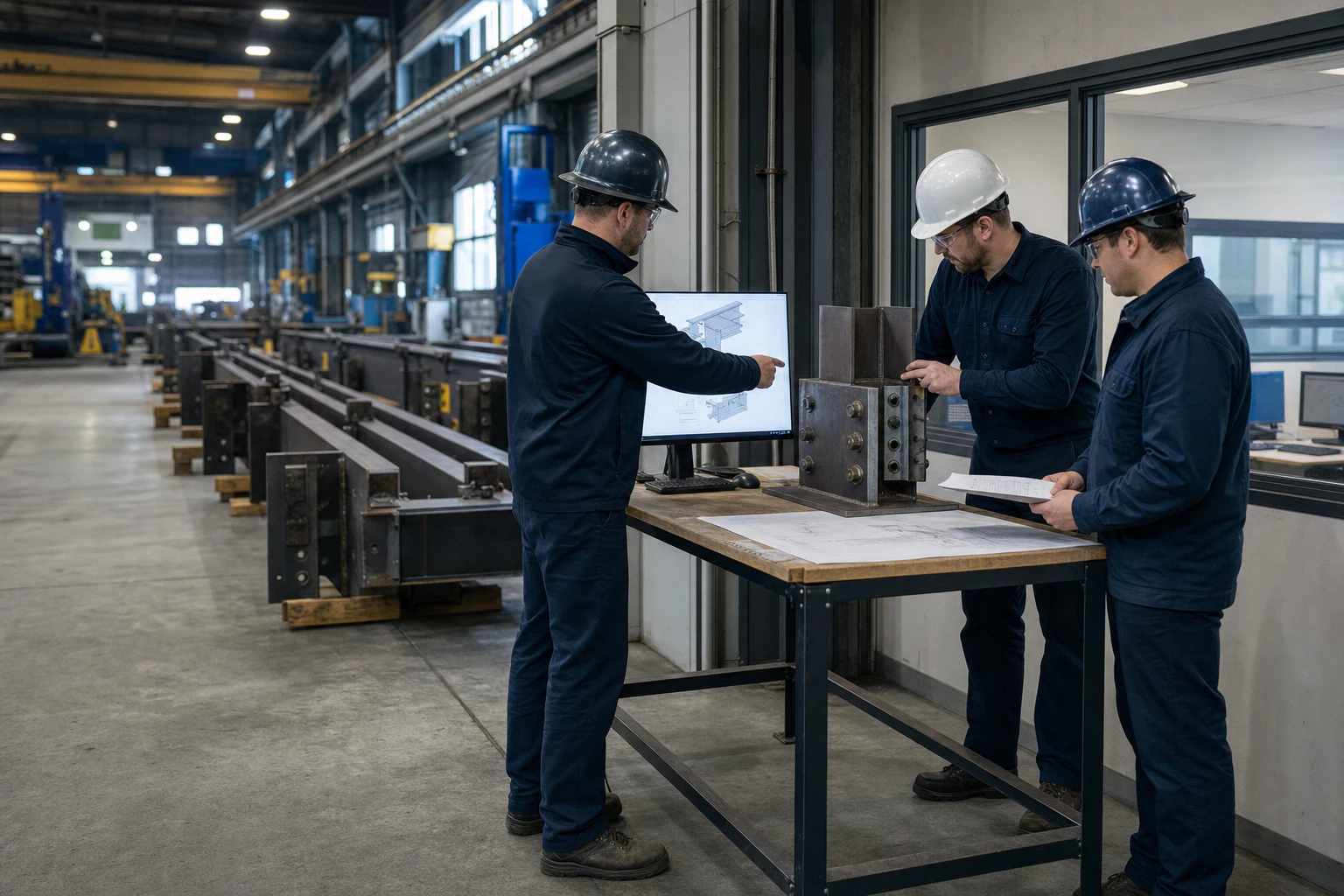
One project with several critical handoffs
Structural steel does not move directly from an idea to the shop. The requirement must first become information clear enough to develop connections and components, prepare the necessary drawings, fabricate the pieces and organize their installation.
Groupe Tremblay can bring together engineering and detailing, fabrication and erection. That continuity may simplify communication, but each assignment still has its own professionals, reviews, responsibilities and contractual requirements.

The process, step by step
-
Define the requirement and responsibilities
The starting point includes the structure type, available documents, intended use, project location, schedule and requested scope. The team must also establish who holds design authority, who supplies reference drawings and who reviews the documents produced.
Unknowns should be identified rather than hidden. An opening still to be confirmed, an interface with existing work or an undocumented access condition can affect several later stages.
-
Engineering, connections and drawings
Depending on scope, engineers and detailers develop connections, structures or the documents needed for fabrication and erection. Detailing work covers steel, concrete and wood, along with fabrication drawings and erection plans.
Comments and reviews need to be captured in a controlled document version before information is used in the shop.
-
Prepare fabrication
Preparation turns reviewed documents into work sequences, parts and assemblies. Materials, dimensions, interfaces, applicable finishes and delivery requirements need to match the agreed scope.
Exact capacity and control stages should be established in the applicable proposal.
-
Fabricate and prepare delivery
Components are produced according to the assignment documents and requirements. Identification, loading order, transportation constraints and erection sequence are best considered together, particularly where field storage is limited.
Changes after fabrication begins need a clear path: source of request, impact, approval and communication to everyone affected.
-
Erect and install in the field
Erection depends on site readiness, access, interfaces with other work and the planned sequence.
Before mobilization, the team needs to confirm actual conditions, assignment limits and the documents governing installation. Specific practices belong in the approved project work plan.
The common thread: consistent information
The central advantage of continuous coordination is fewer breaks in information. Fabrication questions can return to the designers, while field constraints can be considered sooner. This loop does not replace formal reviews. It helps each review happen with shared context.