
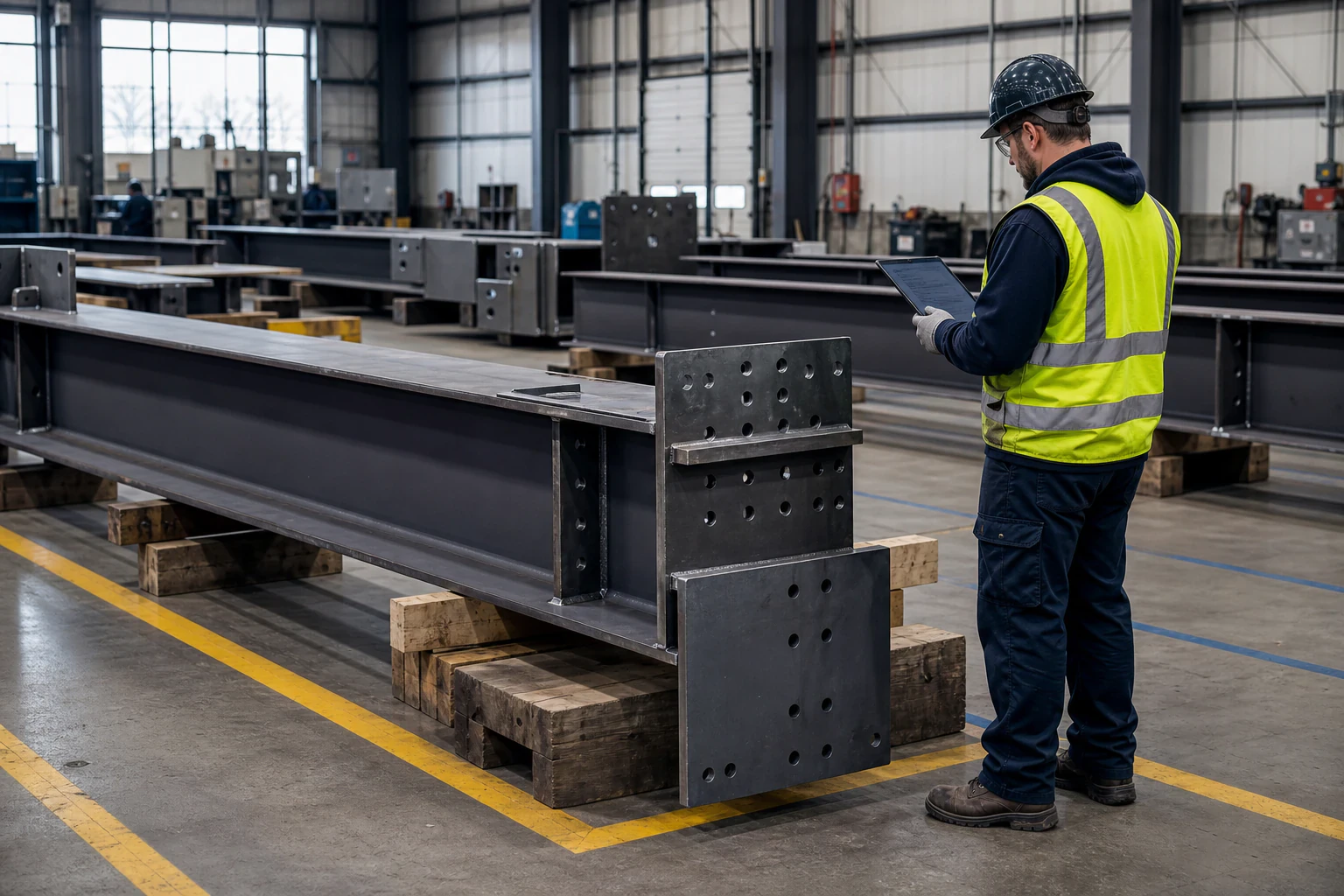
Fabrication begins with usable information
Entering the shop is not the first step in a fabrication assignment. Before a part is prepared, applicable documents, scope, interfaces and revisions need to be clear enough to direct the work.

Confirm the document basis
The project should identify the drawings, specifications and instructions governing fabrication. Each document needs an understandable status and revision. Unresolved comments, missing dimensions and uncertain interfaces should become questions before they become parts.
The review process is not identical for every project. The team needs to know who can authorize a revision and how that authorization will be communicated.

Prepare parts and assemblies
Fabrication drawings organize the information required for parts and assemblies. Preparation considers the work sequence, interfaces and requirements established in the contract.
The shop is organized to adapt its assembly and production flow to specific project needs.
Manage changes without losing the thread
A change may result from coordination, an existing condition or a project decision. To avoid competing versions, the request needs to be identified, assessed, reviewed and redistributed.
A useful revision shows what changed and which parts, interfaces or stages are affected. Shop, delivery and erection teams need to use the same applicable information.
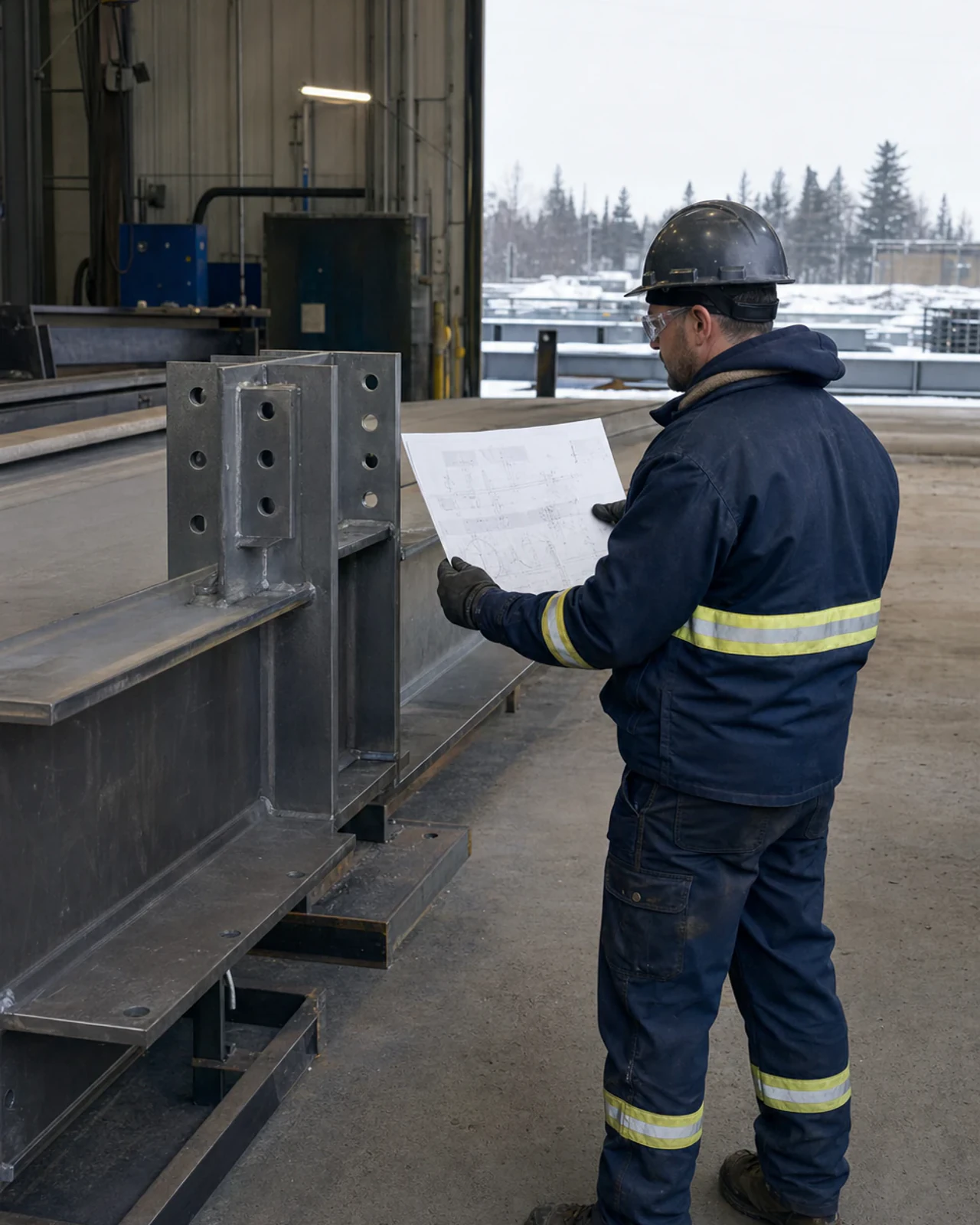
Prepare delivery and the next stage
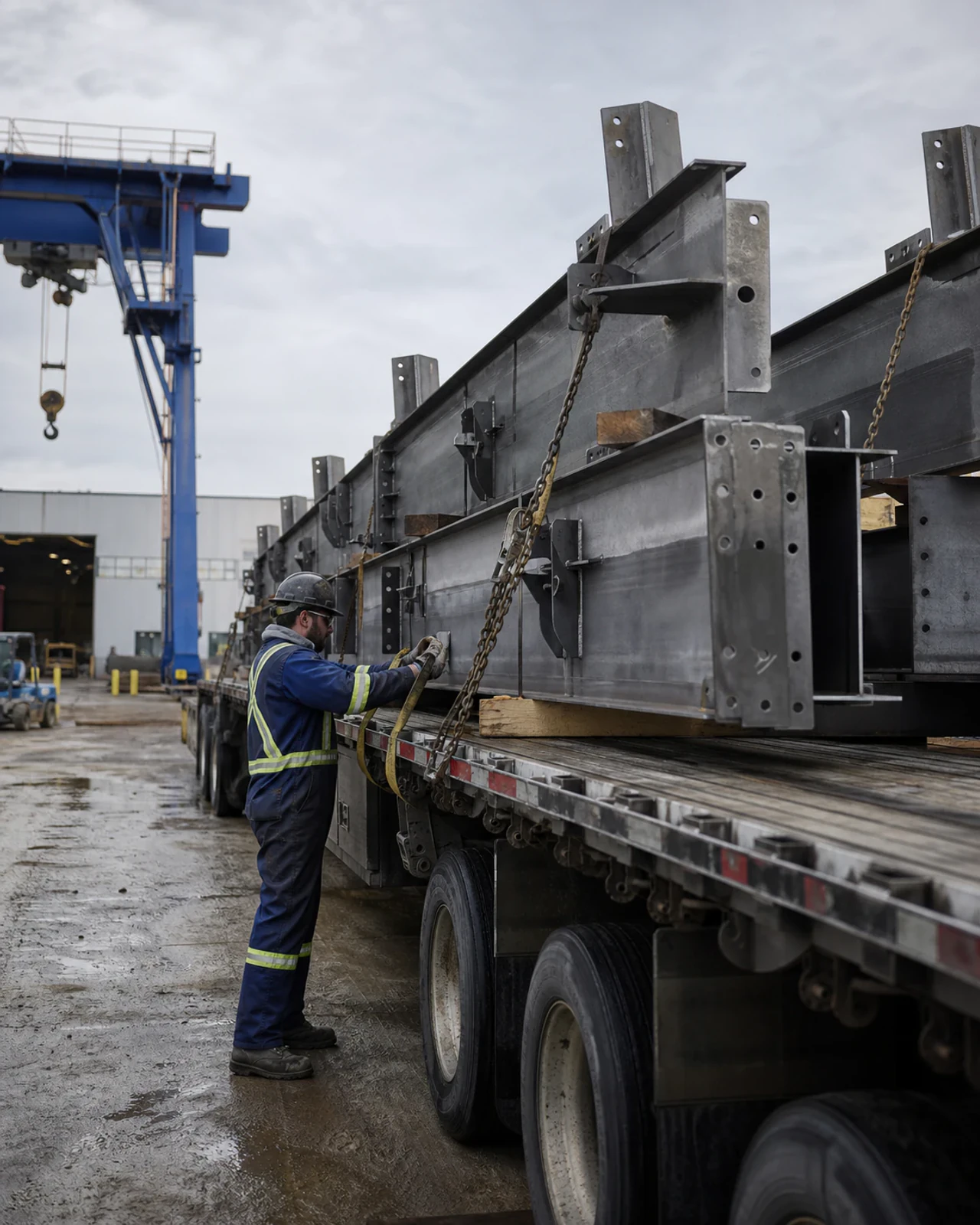
How components are identified, grouped and loaded may relate to erection order, transportation constraints and available field space. These items should be discussed before fabrication is complete.
Delivery is therefore more than movement. It is a handoff to the next team. Documents, marks, contacts and scope limits need to support that transfer.
Useful information to provide
When these elements are established early, the team can distinguish what is ready from what still needs a decision.
- Drawings and specifications with revision
- Expected fabrication scope
- Applicable document requirements
- Interfaces with existing work or other trades
- Finishes or treatments stated in the contract
- Delivery and storage constraints
- Known sequence or milestones
- Question and review process